Understanding Speech-to-Text Technology
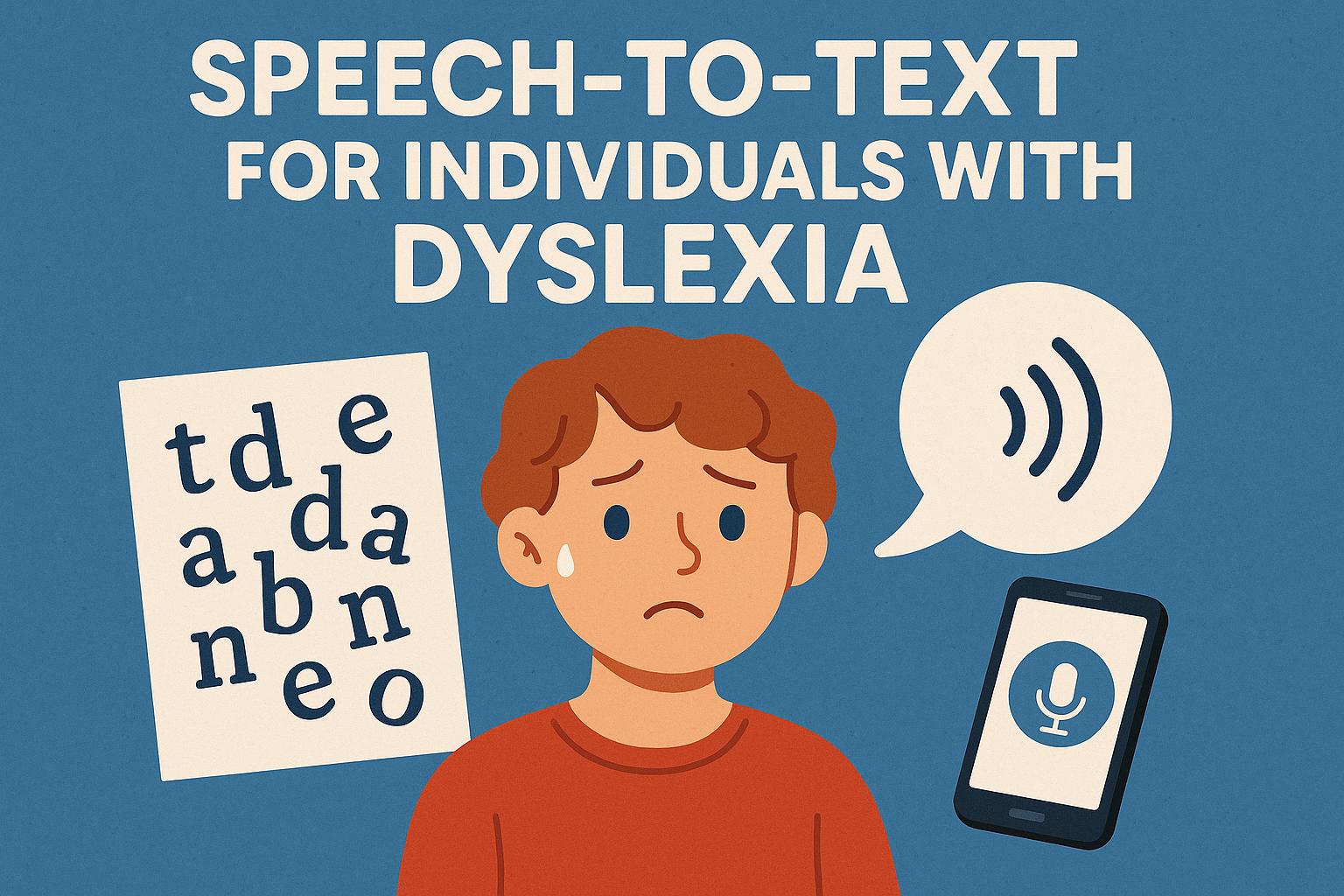
Speech-to-text technology has witnessed substantial improvements over the past few years. It is particularly significant in aiding individuals with dyslexia. Dyslexia is a learning disorder characterized by challenges in recognizing words accurately or fluently, alongside difficulties in spelling and decoding. These challenges can prove arduous in academic or professional settings where reading and writing are crucial activities. Nevertheless, speech-to-text technology emerges as a promising solution to these hurdles.
How Speech-to-Text Works
At its essence, speech-to-text technology is engineered to transform spoken language into written text. This process is powered by sophisticated algorithms that comprehend spoken language, interpret the elements of speech, and transcribe them into written formats. Speech-to-text technology processes audio inputs through several stages: first, the spoken words are digitized; then, they are analyzed to distinguish phonemes and words; finally, the software utilizes linguistic models to construct text that mirrors the spoken content.
By converting speech into text, the technology significantly reduces the necessity for manual decoding of written language. This is a valuable asset for individuals with dyslexia who often encounter difficulties in tackling written language without errors or delays.
Benefits for Individuals with Dyslexia
Simplification of Writing Tasks: For individuals with dyslexia, the tasks of typing or writing can be laborious, punctuated by inaccuracies that often lead to frustration. The adoption of speech-to-text tools shifts the focus from the mechanical effort of writing to the verbal articulation of thoughts, allowing the software to produce text with enhanced accuracy.
Improved Fluency and Comprehension: The utility of speech-to-text technology extends beyond writing. It grants users the ability to focus on content creation and idea flow rather than being bogged down by spelling and grammatical rules—extending a significant relief in overcoming the intrinsic challenges associated with dyslexia. Furthermore, the technology supports reading and comprehension by enabling users to listen to text, thus bypassing the difficulties of written content processing.
Enhanced Learning Experiences: In educational environments, speech-to-text technology offers indispensable support to dyslexic students. It facilitates active engagement with academic material by providing real-time transcription of classroom lectures and discussions. Consequently, students are better positioned to take effective notes and participate fully in learning.
Advancements in Speech-to-Text Technology
Technological advancements have dramatically bolstered the accuracy and functionality of speech-to-text systems. Innovations in machine learning and neural network applications have empowered these systems to accommodate a wide range of accents, dialects, and individual speech patterns with remarkable precision. Furthermore, the introduction of personalization features has enhanced user experience. These features enable the customization of vocabulary and specific commands to reflect the unique requirements and preferences of individual users, rendering the tools more responsive and impactful.
Considerations and Challenges
Despite the numerous advantages speech-to-text technology presents, certain challenges must be addressed. The accuracy of transcription, for instance, is often susceptible to interference from background noise, which can degrade the quality of audio input. Moreover, users may experience a level of self-consciousness when using voice commands in public or shared settings, where verbal interactions are more noticeable.
Additionally, the integration of speech-to-text tools may necessitate a learning curve. Individuals with dyslexia or those unfamiliar with the technology might require an initial period of training and adjustment to navigate and maximize the software’s many functionalities effectively. Providing adequate support and instructional resources can help ease this transition.
For those interested in further exploring assistive technology for dyslexia, resources by organizations such as Understood and the International Dyslexia Association offer expansive insights into the strategies and tools available to support individuals with dyslexia in various aspects of daily life.
In conclusion, speech-to-text technology continues to stand out as a significant asset for individuals grappling with dyslexia. While fostering improved writing and comprehension, it extends the ease of learning and communication in both academic and professional landscapes. With constant advancements in technology, its capacity to enhance the lives of those with dyslexia shows potential for ongoing and broad-reaching growth.