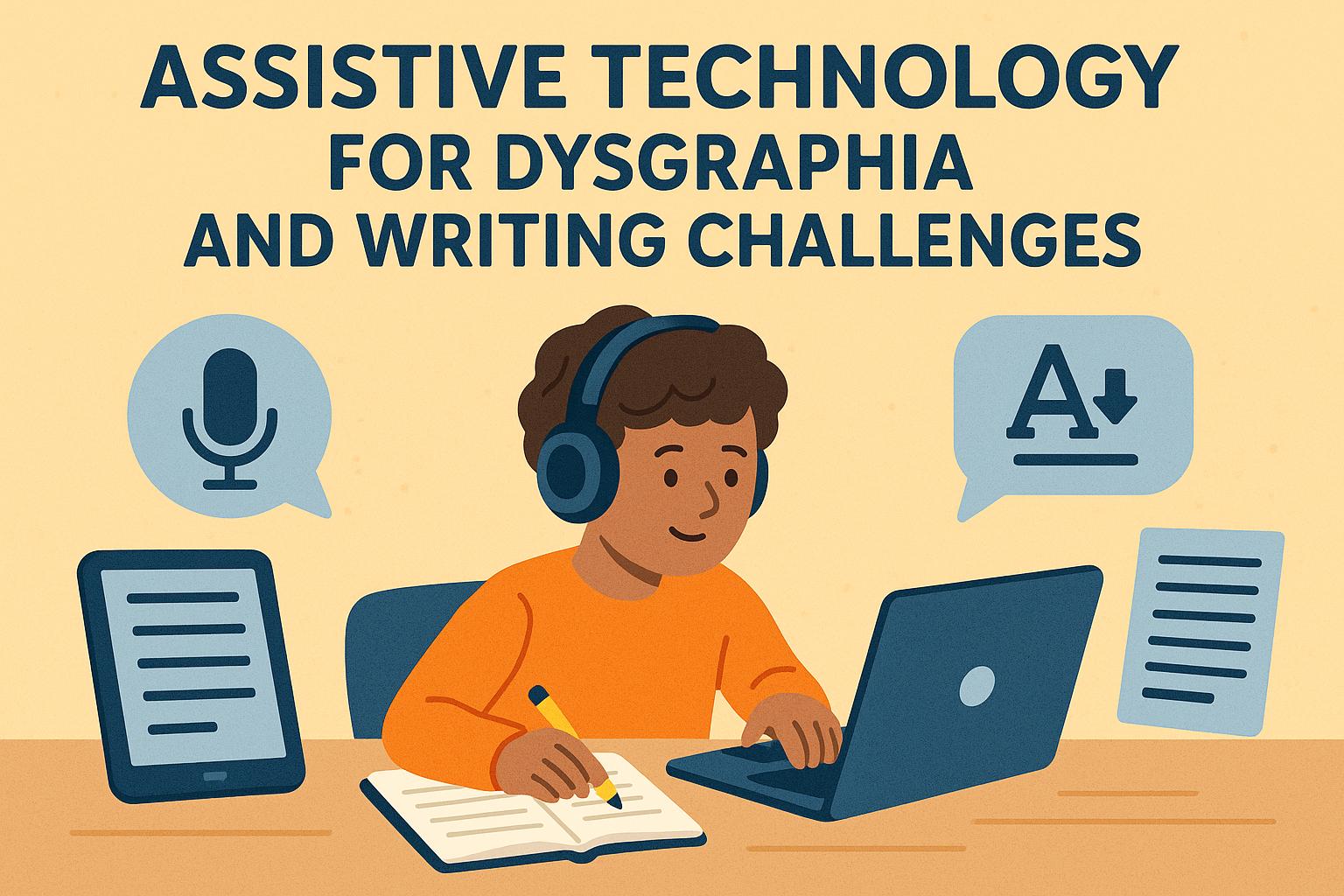
Understanding Dysgraphia and Writing Challenges
Dysgraphia is a specific learning disability that chiefly affects one’s ability to write effectively. The challenges associated with dysgraphia include notable difficulties in spelling, penmanship, and the coherent expression of ideas in written form. In educational and professional environments, individuals experiencing these impediments may confront substantial hurdles, which can contribute to frustration and a decline in performance. However, a range of assistive technologies has emerged as a potent support mechanism, facilitating the mitigation of these obstacles and bolstering written communication skills.
Role of Assistive Technology
The evolution of assistive technology has provided innovative ways to accommodate people with dysgraphia, thereby allowing them to articulate their thoughts more efficiently and accurately. By offering multiple modes of interaction with written content, these tools enhance accessibility and empower users to excel both academically and professionally. Below is an exploration of commonly adopted assistive technologies that extend their utility to individuals struggling with writing challenges.
Speech-to-Text Software
One of the most impactful advancements in assistive technology is the development of speech-to-text software. This software empowers users to vocalize their thoughts, which are then transcribed into text form by the software. Such a capability is especially advantageous for individuals who find the physical aspects of writing or typing cumbersome. Well-known speech-to-text applications like Dragon NaturallySpeaking and Google Voice Typing are engineered to integrate smoothly with word processing applications, thus offering a streamlined writing environment. Each voice command can be transformed into a serviceable and coherent text document, enhancing both speed and efficiency of expression.
Word Prediction Software
Another critical technological aid is word prediction software, which simplifies the writing process by suggesting words based on initial character inputs. This predictive capability proves invaluable for individuals who grapple with issues related to spelling uncertainties or difficulties in quick word retrieval, often encountered by those with dysgraphia. Software applications such as Co:Writer and Grammarly analyze the context to make suggestions that are not only relevant but also contextually appropriate, ultimately improving writing fluency and minimizing errors.
Text-to-Speech Programs
Text-to-speech applications offer a reciprocal function by enabling users to audibly process text, thereby enhancing comprehension and proofreading practice. By listening to their own writing, individuals can gain new perspectives on their text’s coherence and flow, which can be instrumental for editing and refining written material. Popular text-to-speech tools such as Natural Reader and built-in features found in systems like Windows Narrator empower users to receive real-time auditory feedback, opening pathways to improved correctness and clarity in writing.
Graphic Organizers
Graphic organizers serve a unique but equally significant purpose in facilitating the writing process for individuals with dysgraphia. These tools offer a visual framework for organizing thoughts prior to initiating the writing process. For users who find linear thought processes challenging, graphic organizers help scaffold ideas, creating a logical structural flow that can be translated into coherent written outputs. Programs such as Inspiration and MindMeister allow users to construct mind maps, flowcharts, and various visual aids effectively, laying a strong foundational blueprint for writing tasks.
Implementing Assistive Technology
Effectively implementing assistive technology requires a thorough understanding of the individual needs of the user, coupled with contextual considerations for when and how the technology will be applied. Initially, training may be essential to familiarizing individuals with the tools and ensuring they can seize their full potential. This process is often best supported by consistent monitoring and assessment to evaluate progress, enabling necessary adjustments to optimize beneficial outcomes over time.
Further Reading
For more resources on assistive technology options that cater to individuals with learning disabilities, readers may refer to guides provided by organizations like Understood.org and Read&Write. These platforms offer in-depth guidance and practical tools tailored to support and enhance learning for those with unique educational needs.
In conclusion, the integration of assistive technologies has become indispensable in aiding individuals who face dysgraphia and similar writing challenges. By selecting and deploying the appropriate tools from a wide array of available technologies, individuals can elevate their writing skills significantly. This not only improves their academic and professional undertakings but also empowers them to participate more fully in various aspects of life, realizing potential that might otherwise remain dormant due to unaddressed writing difficulties.