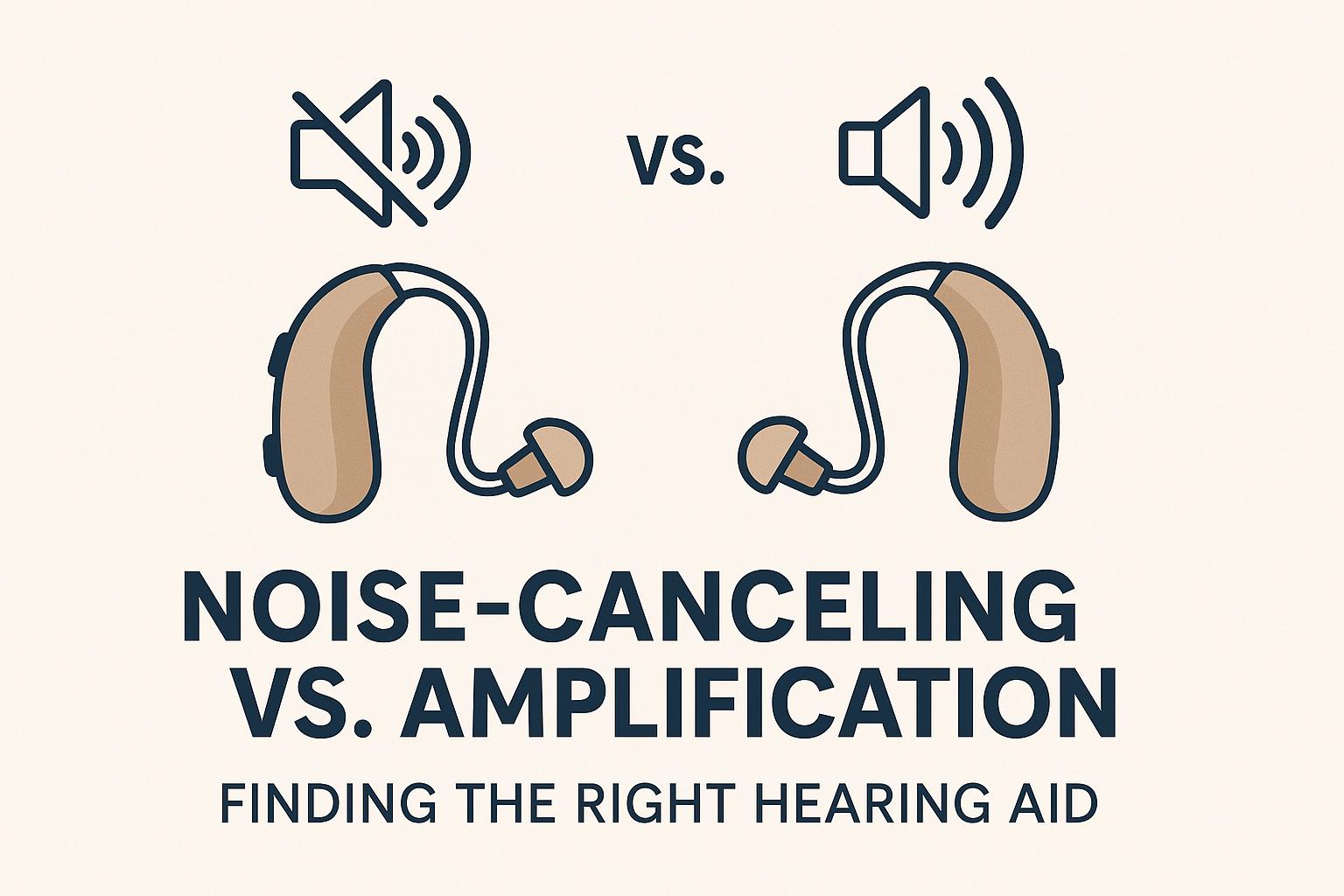
Understanding Hearing Aid Technologies
When choosing a hearing aid, it’s essential to understand the primary technologies available: noise-canceling and amplification. Each technology caters to specific hearing requirements, and selecting the right one depends on the user’s unique needs.
Noise-Canceling Hearing Aids
Noise-canceling hearing aids are designed to reduce unwanted ambient noise, allowing users to focus on speech and other important sounds. They achieve this through advanced digital signal processing, which distinguishes between relevant sounds and background noise.
Who Benefits from Noise-Canceling?
Noise-canceling hearing aids are especially beneficial for individuals with mild to moderate hearing loss who often find themselves in noisy environments. These devices can make it easier to understand speech in crowded places such as restaurants or at social gatherings. By minimizing the ambient noise, users can experience an enhanced ability to follow conversations and participate more fully in group activities, which might otherwise be challenging due to background distractions.
How It Works
Noise-canceling hearing aids use sophisticated microphones to pick up sound waves from the environment. The device then processes these sounds, filtering out irrelevant background noise, such as traffic or chatter, while amplifying the speech or any other designated important sounds. This process results in a clearer sound experience, reducing the auditory strain for the user and enhancing their overall communication abilities.
Amplification Hearing Aids
Amplification hearing aids, on the other hand, focus on increasing the overall volume of sounds. They are particularly useful for individuals with more severe hearing loss, where making all sounds louder is necessary to aid in hearing. This type of hearing aid ensures that users can perceive a range of auditory inputs, which might include speech, environmental sounds, and even music. It offers a more comprehensive solution for those whose hearing loss affects their ability to hear across a wide spectrum of frequencies.
Who Benefits from Amplification?
Amplification hearing aids are suitable for users who require a significant boost in volume across various frequencies, rather than just distinguishing between speech and noise. These devices help users better engage in everyday conversations by enhancing their ability to recognize words and sounds that might otherwise be difficult to hear. This can lead to improved communication in both personal and professional contexts, making interactions more seamless and natural.
How It Works
Amplification hearing aids employ a microphone to capture sound, which is then amplified through a speaker. Users can often adjust the level of amplification based on their specific needs, providing flexibility to adapt to different listening environments. Whether in a quiet room or a bustling street, the ability to fine-tune the amplification allows users to maintain auditory clarity and comfort, thus supporting their overall hearing experience.
Finding the Right Fit
Choosing between noise-canceling and amplification hearing aids depends on several factors, including the severity of hearing loss, lifestyle, and the most common listening environments an individual encounters. Consulting with an audiologist can provide valuable insights, as professionals are equipped to evaluate individual hearing patterns and recommend the best-suited technology. This tailored approach is crucial for maximizing the effectiveness of a hearing aid.
Consider Professional Guidance
A professional audiologist can perform detailed evaluations to determine the type and extent of hearing loss. With this information, they can recommend the most suitable hearing aid technology, offering a customized approach that meets both functional and personal preferences. This process typically involves a series of hearing tests, where the audiologist measures an individual’s hearing ability across different frequencies and in various settings. By understanding these nuances, an audiologist can guide users towards the most appropriate hearing aid technology.
Customization and Adjustment
Hearing aids today offer various levels of customization. Many come equipped with programmable settings, allowing audiologists to fine-tune the device specifically to a user’s needs. This might involve adjusting the device to better amplify certain frequencies or enhance features like directional microphones that further aid in focusing on particular sounds while minimizing others. Such customization ensures not only that the hearing aid is tailored to the user’s immediate needs but also that it can be adjusted over time as those needs change.
Evaluating Lifestyle Needs
Lifestyle plays a crucial role in the decision-making process. Those who frequently engage in social activities or work in noisy environments might benefit more from noise-canceling technologies. In contrast, individuals whose everyday situations involve quieter settings with occasional loud environments might find amplification aids more useful. Analyzing these lifestyle aspects is vital in selecting a hearing aid that accommodates situational nuances and provides a more satisfactory auditory experience.
Long-Term Hearing Support
Hearing aids are a significant investment in long-term auditory health. Regardless of whether one chooses noise-canceling or amplification technologies, regular check-ups with an audiologist are crucial. These ensure that the aid continues to function optimally and that adjustments can be made as necessary. Additionally, as technology advances, newer models may offer more features or better performance, providing users with the option to upgrade and improve their hearing experience continually.
In Conclusion
Choosing the right hearing aid is a critical decision that requires careful consideration of personal hearing needs and lifestyle factors. Both noise-canceling and amplification hearing aids offer valuable benefits, but understanding the nuances of each type is essential for making an informed choice. By seeking professional audiologist advice and evaluating the specific circumstances in which one requires auditory assistance, individuals can select a hearing aid that effectively meets their needs and enhances their quality of life. Continued professional guidance and regular updates to hearing aid settings ensure long-term satisfaction and help users achieve the best possible auditory experience.