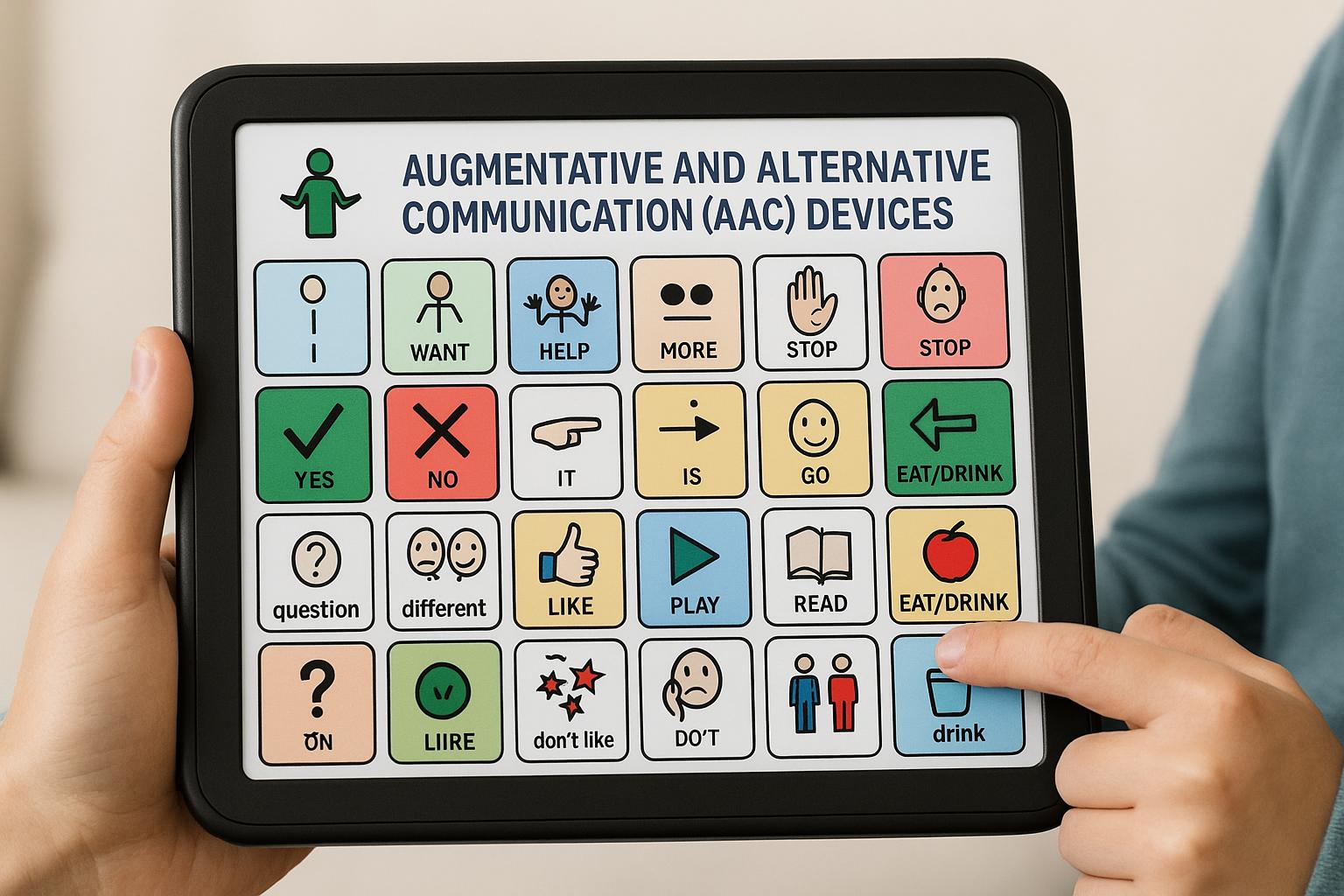
Understanding Augmentative and Alternative Communication (AAC) Devices
Augmentative and Alternative Communication (AAC) devices serve as crucial instruments for individuals facing communication barriers. These tools facilitate both verbal and non-verbal interactions, thereby enhancing the communication capacities of people with diverse disabilities. This discussion delves into the fundamental elements of AAC devices and underscores their importance in modern society.
What are AAC Devices?
AAC devices encompass a spectrum of tools crafted to aid individuals who encounter difficulties communicating conventionally through spoken language. These tools vary from basic, low-tech solutions to sophisticated, state-of-the-art devices integrated with advanced technology. The primary objective of AAC devices is to complement or substitute verbal communication, thereby empowering users to express their thoughts and needs more comprehensively.
Types of AAC Devices
AAC devices are generally classified into two principal categories:
Unaided AAC Systems: These systems do not involve any external tools beyond the user’s physical capabilities. Examples include sign language and gestures, which rely solely on body movements and facial expressions to convey messages.
Aided AAC Systems: Contrasting with unaided systems, aided AAC systems necessitate external tools or devices to function. These systems range from simple communication boards or picture cards to complex electronic devices and software capable of producing speech or written text.
Electronic AAC Devices
Electronic AAC devices are equipped with advanced features, including voice synthesis and dynamic display functionalities. These cutting-edge solutions often come with touchscreens and may integrate augmentative applications for use on smartphones and tablets. Ongoing advancements in software development continue to enhance the adaptability and ease of use of these devices, making them more effective for diverse user groups.
Low-Tech AAC Devices
Despite technological advancements, low-tech solutions maintain their relevance, especially for individuals who prefer or necessitate more straightforward tools. Low-tech AAC devices encompass paper-based systems, such as letter boards or picture exchange systems, which do not depend on electronic power. These resources prove especially useful in environments where electronic equipment is either unavailable or impractical.
The Importance of AAC Technology
AAC devices significantly contribute to enhancing the quality of life for individuals with communication impairments. They provide necessary means for conveying needs, sharing thoughts, and engaging actively in social interactions. Furthermore, this technology facilitates academic progress by promoting effective communication between students and educators, leading to a more inclusive learning environment.
Advancements in AAC Devices
Recent progress in AAC technology has led to substantial improvements in user experience and functionality. Cutting-edge technologies, such as artificial intelligence and machine learning, are increasingly being employed to create more intuitive and customized communication systems. Additionally, the seamless integration of AAC technology with mainstream devices like tablets and smartphones has further enhanced accessibility and convenience, catering to a broader audience of users.
Challenges and Considerations
Despite the numerous advantages offered by AAC devices, users and caregivers might face certain challenges. One of the primary concerns is the selection of an appropriate device, which necessitates an exhaustive assessment of the user’s personal needs, capabilities, and communication objectives. Furthermore, ensuring that users and caregivers receive adequate training and continuous support is crucial for the successful deployment and utilization of these devices.
The logistical and financial aspects of acquiring AAC devices also present potential barriers. The cost of high-tech devices can be prohibitive for some, necessitating a careful evaluation of cost-benefit and potential funding sources. Exchangeable parts and maintenance also imply ongoing expenses that must be accounted for in planning.
Training and Support
Effective implementation of AAC systems also mandates comprehensive training programs for users, caregivers, and educators. These training sessions focus on familiarizing stakeholders with device operations and best practices for maximized usage. Support networks and communities play a vital role in sharing resources, troubleshooting issues, and providing emotional support.
Unified efforts from healthcare providers, educational institutions, and technology developers are essential to developing tailored solutions that address the unique needs of each individual. Collaborative approaches ensure that AAC technology continues improving, becoming more user-friendly, inclusive, and effective.
Societal Impact
The broader societal impact of AAC technology is undeniable, as it plays a transformative role in enabling inclusive communication for individuals with speech and language difficulties. By facilitating independence and improving social interaction, AAC devices contribute towards fostering a more diverse and inclusive society that values the contributions of individuals with varied communication abilities.
Moreover, AAC devices can also raise awareness and open avenues for communication across multiple domains, including healthcare, education, employment, and social settings. The increased visibility and acceptance of AAC technology pave the way for developing policies and infrastructure that support accessibility and inclusion on a larger scale.
Conclusion
In summary, Augmentative and Alternative Communication (AAC) devices represent invaluable tools that equip individuals facing communication challenges with the means to connect effectively with their surroundings. A comprehensive understanding of the features, types, and technological advancements in AAC devices is essential for selecting and employing appropriate tools catering to varied communication needs.
Continuous advancements in AAC technology, coupled with support from healthcare professionals and educational sectors, promise a brighter future for individuals relying on these devices, ultimately leading to a more inclusive and communicatively rich world. The ongoing exploration and development in this field highlight the potential for aiding those with unique communication needs and integrating them seamlessly into society.