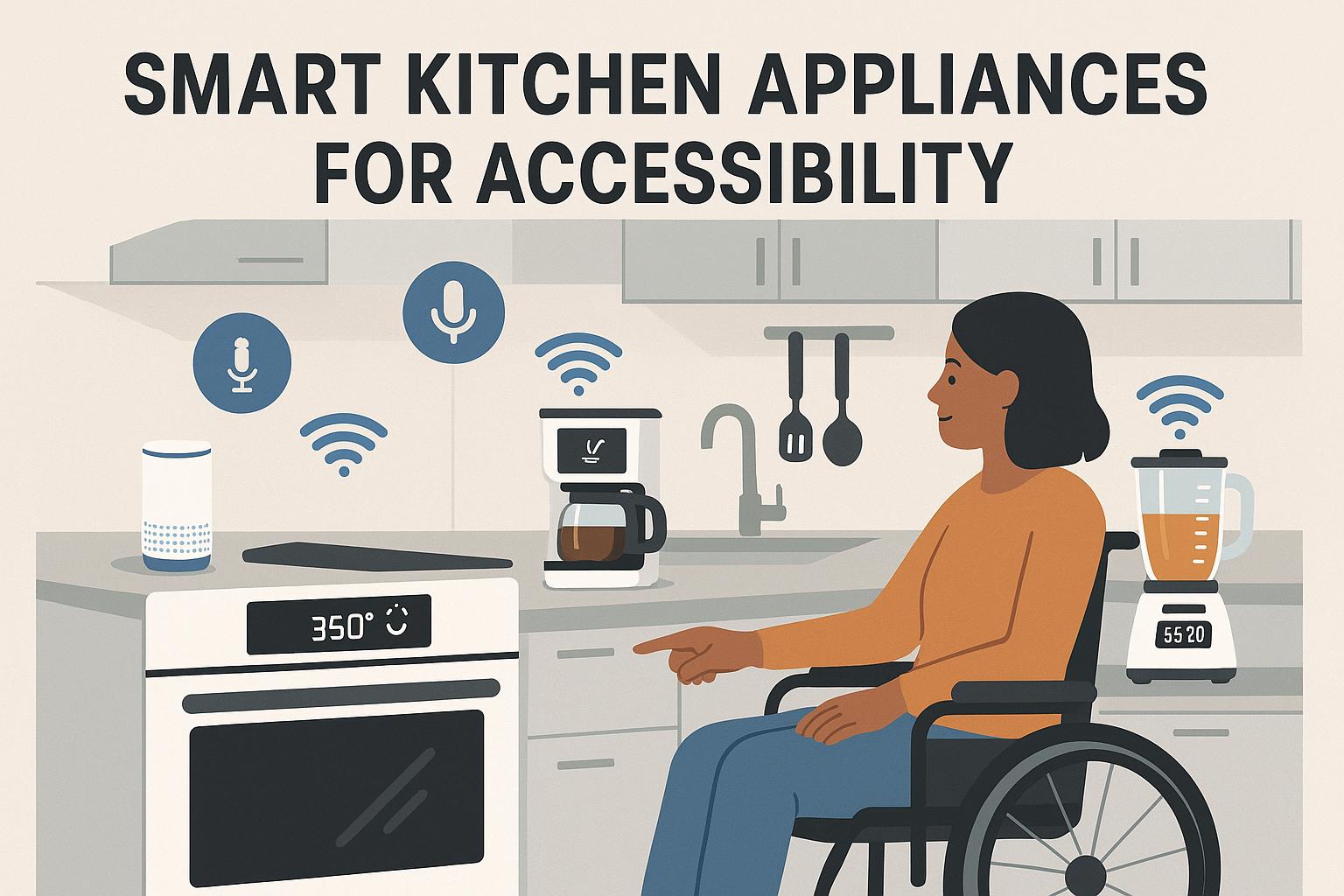
Introduction to Smart Kitchen Appliances for Accessibility
In the modern era, technology has made significant strides in enhancing the quality of life for individuals with disabilities. One critical area of this technological evolution is the development of smart kitchen appliances, designed to offer greater accessibility and convenience. These appliances incorporate advanced technologies to assist those with physical, visual, or cognitive impairments, ensuring a more inclusive kitchen environment.
Features of Smart Appliances for Accessibility
Smart kitchen appliances come equipped with features that are especially tailored to meet the needs of individuals with varying abilities. Below are some of the essential features:
Voice Control: Many smart appliances integrate with virtual voice assistants such as Amazon Alexa or Google Assistant. This feature allows users to control the appliance using voice commands, which is particularly useful for individuals with limited mobility. Voice control provides users the freedom to access and manage kitchen tasks without the need for physical interaction with the appliances. This is particularly beneficial in scenarios where the user may not be directly next to the appliance or may be engaged in another task.
Mobile App Integration: Smart kitchen devices often connect to mobile apps, enabling remote control. This is advantageous for those who face difficulties reaching or operating the appliances manually. Mobile apps typically offer easy-to-use interfaces and provide real-time updates on the appliance’s status. Through mobile apps, users can schedule cooking times, adjust settings, and receive notifications about the cooking progress or any issues requiring immediate attention.
Adjustable Settings: Enhanced customization options allow users to adjust settings according to their specific needs. For instance, adjustable height for countertops and smart stovetops with varied heat settings can aid users with different levels of ability. These customizable features allow the kitchen environment to be adaptable, catering to individual needs and preferences, enhancing both comfort and safety.
Types of Smart Kitchen Appliances
Different types of smart appliances can be found in the kitchen, each serving a unique purpose to enhance accessibility.
Smart Ovens: Equipped with sensors and connectivity features, smart ovens can be pre-programmed with cooking instructions. Some models even include a self-cleaning option, reducing physical exertion and the risk of burns. Smart ovens may feature an internal camera, allowing users to remotely monitor food while it cooks, ensuring that precise cooking instructions are followed without the need for constant supervision.
Refrigerators: These appliances often come with features like transparent doors or cameras inside the unit, allowing users to check contents via a smartphone app. This reduces the need to open and close the refrigerator frequently, which is beneficial for those with limited strength. Some models also offer automated inventory features, sending notifications when supplies are running low, thereby aiding in planning and reducing the need for frequent physical checks.
Dishwashers: Innovative dishwashers can be started or stopped remotely via a smartphone, and some even have auto-dosing detergents to minimize manual work. These dishwashers often come equipped with adjustable racks designed to accommodate various dish sizes, ensuring usability for all users and making dishwashing a more straightforward, less stressful task.
Benefits of Smart Kitchen Appliances
The incorporation of smart technology into kitchen appliances provides a range of benefits that significantly impact users’ everyday lives.
Independence: Smart appliances empower individuals with disabilities to perform daily cooking tasks independently, reducing their reliance on caregivers. By automating many kitchen tasks, users gain more autonomy over their daily routines.
Safety: With features like automatic shut-off and alerts, these appliances provide an additional layer of safety, crucial for individuals who might forget to turn off appliances manually after use. Sensors can detect hazardous conditions, such as overheating, and can take corrective action, drastically reducing the risk of accidents.
Convenience: Increased convenience is another major benefit, as these appliances facilitate meal preparation and cleanup activities with minimal effort. Smart appliances streamline processes that often require significant time and energy, thereby making meal preparation more efficient and less daunting for individuals facing physical challenges.
Conclusion
As technology continues to advance, the development of smart kitchen appliances is likely to become even more sophisticated, further enhancing accessibility for individuals with disabilities. By focusing on user-centric designs, these appliances are poised to offer unprecedented levels of control and functionality, making the kitchen safer and more user-friendly for everyone.
The continuous evolution of smart appliances paves the way for newer innovations that will cater even more comprehensively to individual needs. Future designs may incorporate even more intelligent systems capable of learning user preferences and adapting functionality automatically to meet diverse requirements, thus offering an enhanced personalized experience that further simplifies kitchen tasks. For a deeper dive into specific smart appliances and their accessibility features, you can explore more detailed resources and reviews from specialized technology websites.