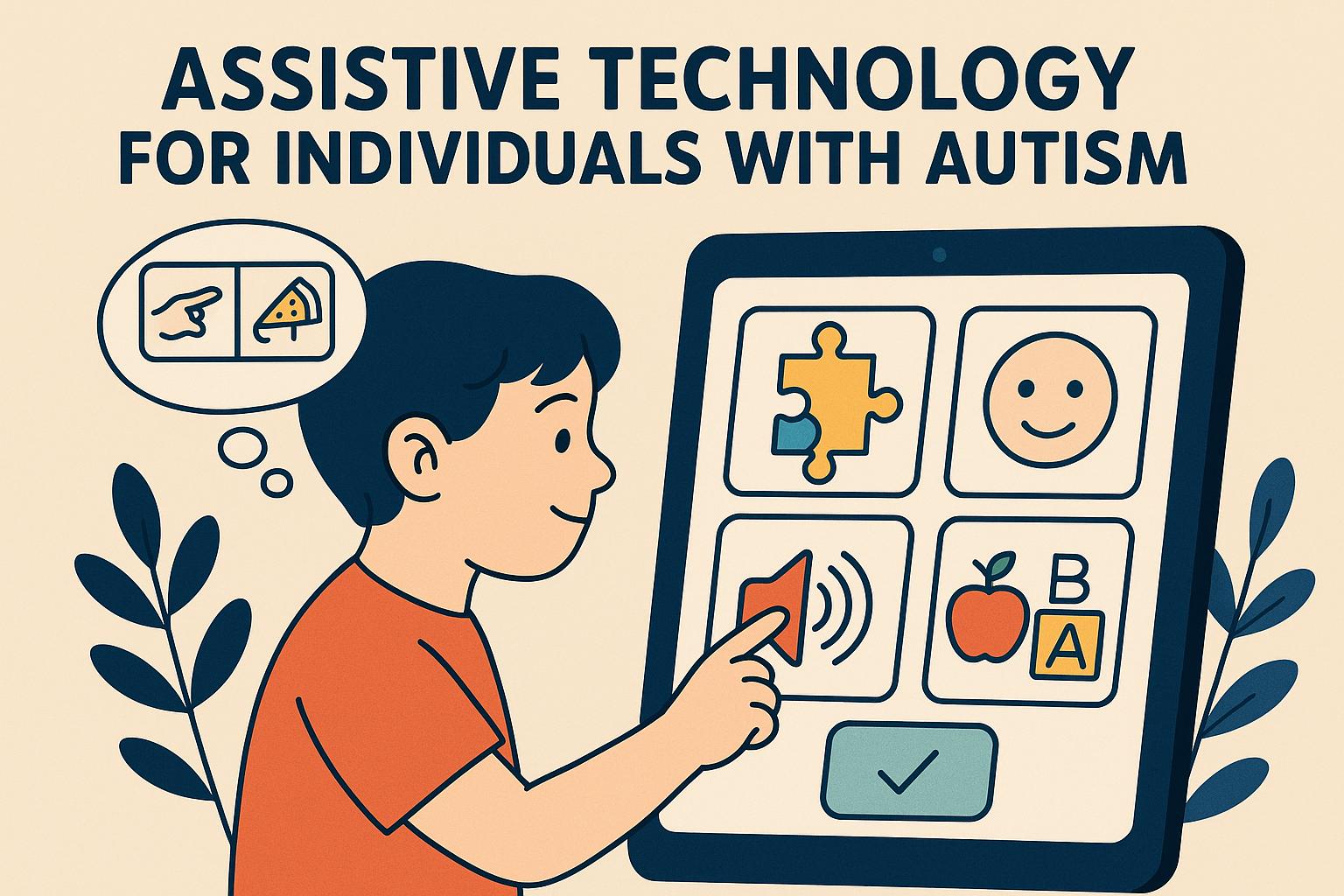
Understanding Assistive Technology for Autism
Assistive technology plays a significant role in supporting individuals with autism, enhancing their communication, education, and daily living skills. The Centers for Disease Control and Prevention highlight that autism spectrum disorder (ASD) impacts about 1 in 54 children in the United States, and many of these individuals benefit from various types of technological aids. This document aims to explore the variety of assistive technologies available and the ways they facilitate improved quality of life for individuals with autism.
Types of Assistive Technology
Assistive technology for individuals with autism encompasses a broad spectrum of tools and devices. These vary from low-tech to high-tech solutions, each with distinct applications and benefits. Low-tech solutions, such as picture boards or visual schedules, provide simple yet effective means of communication and organization. On the other hand, high-tech solutions include advanced software applications on tablets or specialized communication devices designed to bridge communication gaps and enhance learning opportunities. Understanding the breadth of these technologies can be pivotal in identifying the right tools for specific needs.
Communication Aids
A central challenge for many individuals with autism lies in communication. Assistive technology provides various tools that help address these communication barriers. Speech-generating devices (SGDs) and augmentative and alternative communication (AAC) apps enable individuals to express their needs, preferences, and emotions in more effective ways. These tools are designed to cater to differing levels of speech and language skills, from non-verbal individuals to those needing support with articulation and language structure. Furthermore, electronic communication boards offer visual support which can be critical in aiding users to convey their thoughts and feelings.
Educational Tools
Educational technologies tailored for students with autism are designed to provide a customized learning experience. The inclusion of various software programs specifically for language, mathematics, and social skills instruction is noteworthy. These programs often employ interactive formats that engage users effectively. In particular, applications that adjust their difficulty levels based on the user’s performance ensure access to educational content that matches an individual’s learning pace and capacity. Such technologies are instrumental in facilitating a comprehensive educational experience that might otherwise be inaccessible.
Social Interaction Support
Interpersonal communication and social interaction are often areas where individuals with autism face challenges. To support social development, assistive technologies offer innovative solutions such as virtual reality programs that simulate everyday social scenarios. These platforms provide a safe and controlled environment where individuals can practice social skills and participate in role-playing exercises. By simulating real-world interactions, these technologies encourage users to explore social concepts and build confidence in their social abilities.
Daily Living Assistance
Beyond communication and education, assistive technology plays a crucial role in daily living assistance for individuals with autism. Various tools help manage day-to-day tasks, thus promoting independence. For instance, visual schedules assist in planning daily activities, while timers help manage time effectively during tasks. Organizational apps can also serve users by reminding them of important tasks and facilitating a structured routine. These technologies collectively support users in achieving greater autonomy and self-sufficiency in daily life.
Research and Development
The continual evolution of assistive technology for autism owes much to dedicated research and development efforts. Researchers and organizations strive to develop new tools aimed at enhancing the quality of life for individuals with autism. Innovations are tailored to meet the diverse needs within the autism community, focusing on improving existing technologies or introducing novel devices and applications. The collaboration between technology developers and autism specialists ensures that these tools are grounded in scientific research and address real-world challenges faced by individuals with autism.
Finding the Right Technology
Selecting appropriate assistive technology requires a thorough understanding of the user’s specific needs and preferences. Working closely with professionals, such as speech-language pathologists, occupational therapists, and special education teachers, can aid in identifying the most suitable technologies. These professionals are typically experienced in assessing the unique requirements of individuals with autism and can recommend appropriate tools that complement existing support strategies. Tailored technology choices empower users by aligning tools with their personal goals, resulting in enhanced engagement and success across various areas of their lives.
For those seeking further insights into assistive technology for autism, reputable resources include organizations like Autism Speaks and the Autism Society. These organizations offer comprehensive educational materials, updates on the latest research developments, and a glimpse into innovative aids tailored for the autism community. Through exploring these resources, individuals can gain valuable knowledge and guidance on enhancing support for those with autism across diverse aspects of life.
Overall, assistive technology bridges gaps in communication, education, social interaction, and daily living for individuals with autism. The continued research and personalized application of these tools hold promise for enabling individuals with autism to achieve their fullest potential, fostering greater inclusivity and understanding in society at large.