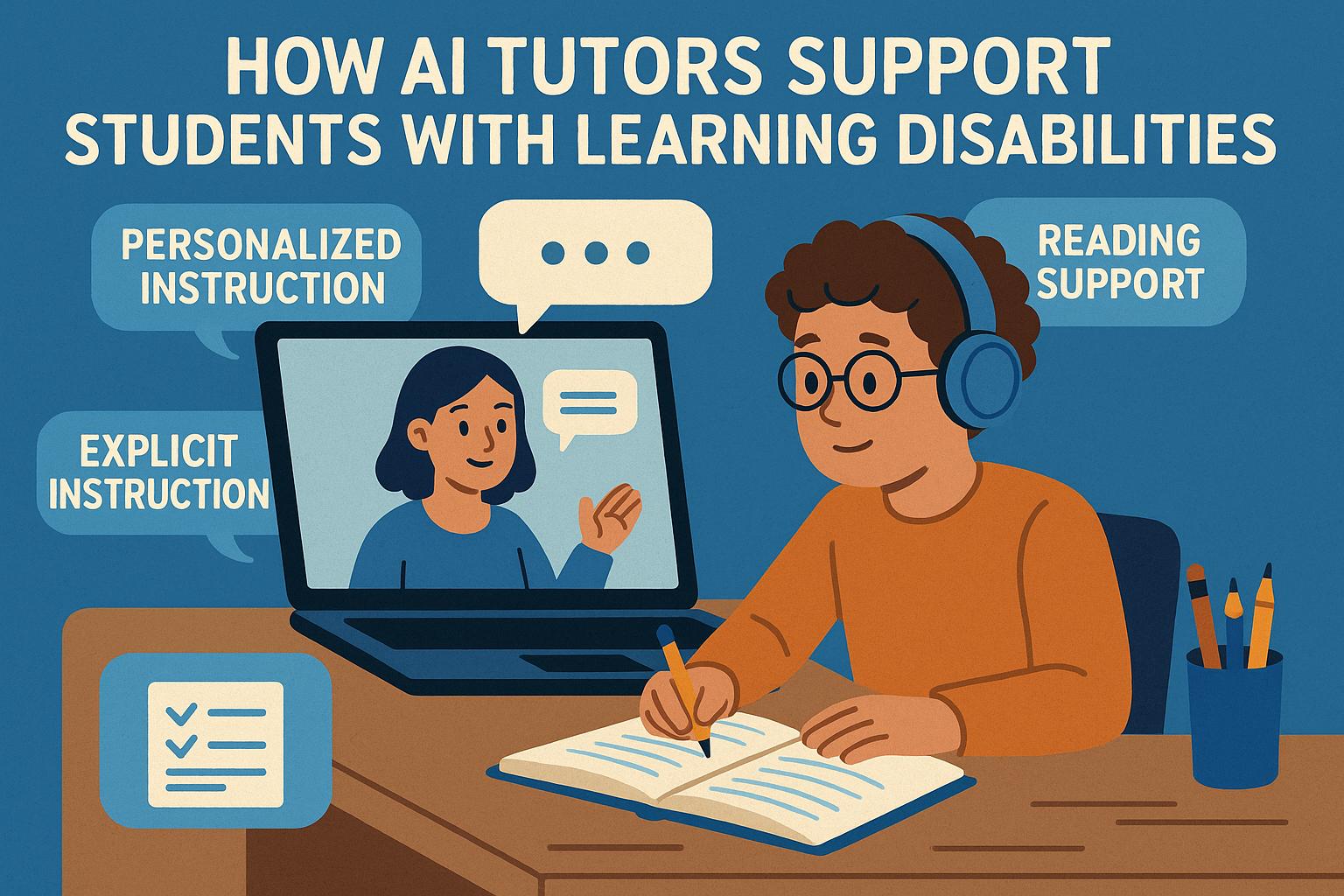
Introduction to AI Tutors
Artificial Intelligence (AI) has increasingly become an indispensable component of educational technologies, revolutionizing the way learning experiences are offered and tailored to meet individual needs. Within this array of applications, AI tutors stand out for their significant contributions in assisting students with learning disabilities. This article delves into how these advanced educational tools powered by AI are actively reshaping learning environments to accommodate and support students requiring additional educational aid.
Understanding Learning Disabilities
Learning disabilities encompass a broad range of conditions that hinder a person’s ability to acquire and process information effectively. These challenges can manifest in various skills, including reading, writing, mathematical reasoning, and comprehension. Traditionally, individuals with learning disabilities have depended on specialized instructional methodologies and specific accommodations to help mitigate these challenges. However, with the rise of AI tutors, technology offers novel opportunities for delivering highly personalized assistance that caters directly to the needs of each student.
Adaptive Learning Techniques
AI tutors are renowned for their proficiency in providing adaptive learning experiences that cater specifically to individual needs. By analyzing a student’s unique learning patterns and identifying areas of difficulty, these systems tailor educational content to address specific challenges. Through continuous assessment of performance, AI tutors can dynamically adjust difficulty levels, offer content in various formats, and provide supplemental practice in areas where the student faces difficulties. This personalized approach ensures that students receive the specific support they need to thrive academically.
Real-Time Feedback
An outstanding advantage of AI tutors is their capability to deliver instant feedback. This immediacy allows students to comprehend their errors and rectify them promptly, thereby reinforcing the learning process and enhancing retention. For students grappling with learning disabilities, receiving timely feedback is critical, as it enables them to modify their strategies in real-time, reducing frustration and promoting a more positive learning experience.
Assistance in Diverse Subjects
AI tutors are proficient in offering support across a diverse array of subjects, from mathematics to language arts. By leveraging multimodal approaches that incorporate text, audio, and visual aids, these tools enhance comprehension and engagement. This multimodal support proves particularly beneficial for students with learning disabilities, as they often benefit from instructional strategies that extend beyond traditional textbook approaches.
Data-Driven Insights
Through the collection of performance data, AI tutors furnish educators and parents with valuable insights into a learner’s progress. This information aids in identifying effective strategies and pinpointing areas that require additional attention. Particularly noteworthy is the ability of AI to identify patterns that may elude human educators, enabling more informed decisions regarding personalized interventions and instructional approaches.
Role of Human Instructors
While AI tutors offer a plethora of benefits, the significance of human instructors remains paramount. AI technology is designed to complement, not replace, traditional teaching techniques. Teachers provide the emotional support and social interaction that current technology lacks the capacity to replicate. Moreover, educators are crucial in interpreting AI-generated data and adapting their teaching methodologies accordingly, ensuring that the integration of AI benefits all students.
Challenges and Considerations
Despite the potential advantages, several challenges accompany the implementation of AI tutors for students with learning disabilities. Concerns around data privacy and the financial implications of such technologies are frequently cited. Ensuring that AI systems remain inclusive and accessible is vital, particularly for remote or underserved communities that may lack the necessary infrastructure to support these technologies effectively.
Future Prospects
The future of AI tutors in the educational landscape, especially for students with learning disabilities, remains bright. As AI technology continues to advance, its capacity to provide even more personalized and effective learning solutions is likely to expand. Continued research and collaboration between technologists, educators, and policymakers will be essential in maximizing AI’s potential while navigating its challenges with responsibility and foresight.
For further insights into AI in education, consider reviewing studies conducted by educational technology research groups and academic institutions, which offer a wealth of information on the evolving role of AI tutors in educational settings.