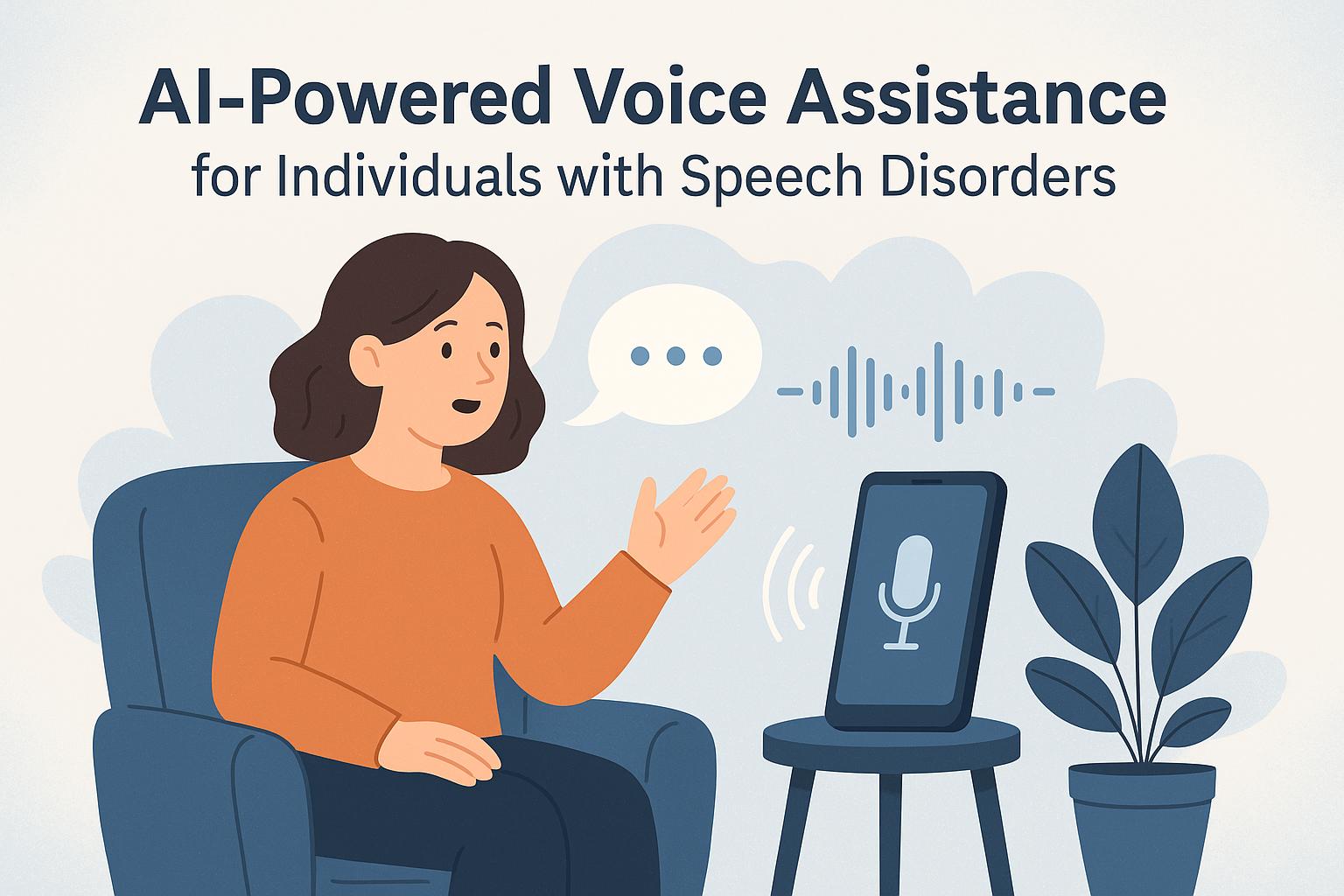
Introduction to AI-Powered Voice Assistance
The progression of artificial intelligence (AI) technologies has brought about a transformational change in assistive technologies, specifically focusing on voice assistance for individuals grappling with speech disorders. These innovations are forging new pathways in improving the quality of life for those affected. Speech disorders, a broad category including diverse conditions that impact an individual’s capacity to generate or comprehend spoken language, can often present significant life challenges. AI-powered voice assistance emerges as an inventive solution poised to address and reduce these challenges effectively.
Understanding Speech Disorders
Speech disorders can be categorized into various types such as stuttering, apraxia, dysarthria, and aphasia, each with distinctive characteristics and causes. These disorders may be rooted in neurological complications, developmental anomalies, or physical incapacities. Traditional speech therapy has long been a pivotal approach in managing these disorders, offering structured techniques to improve speech capabilities. However, with the rapid integration and acceptance of technology, particularly AI, an additional layer of support is now feasible, providing more holistic assistance for individuals with speech impairments.
Functionality of AI in Voice Assistance
AI-integrated voice assistants leverage sophisticated machine learning algorithms to enhance communication avenues for those living with speech disorders. These systems are not only designed to understand atypical speech patterns but are also structured to respond aptly, providing a robust framework for enhanced communication. The technology aids users in multiple significant ways:
Speech-to-Text Conversion: AI technologies can transcribe spoken language into written text, thereby facilitating communication when verbal interaction proves to be inefficient.
Text-to-Speech Conversion: These assistants can also transform written or typed text back into spoken voice, providing an alternative mechanism for communication, especially when vocal expression is impaired.
Speech Recognition and Adaptation: AI systems today are dynamic, continuously learning and adapting to an individual’s specific speech patterns to improve recognition accuracy and responsiveness over time, thereby enhancing the communication experience.
Innovations in AI Technology
Recent advancements in AI have significantly bolstered the functional capabilities of voice assistant technologies, enabling the development of more refined and accessible solutions for speech disorders. These are underpinned by cutting-edge developments in deep learning and natural language processing (NLP), which offer expansive opportunities to better support those with speech impairments. Pioneering innovations in this domain encompass:
Personalized Voice Models: With the advent of personalized voice models, AI systems are now capable of being tailored to reflect the unique speech patterns of individual users. This feature not only augments user experience but also enhances the AI’s ability to understand and replicate specific speech nuances.
Real-Time Feedback: Advanced AI solutions now include mechanisms for providing real-time feedback during communication exercises. This immediacy in data and insights allows both users and therapists to receive constructive feedback almost instantly, thus facilitating better training and improvement outcomes.
Practical Applications
The incorporation of AI-powered voice assistants has begun to permeate various environments, ranging from healthcare facilities to individual home settings, underscoring their practical applicability. In healthcare scenarios, these tools are employed to aid patient communication, bridge gaps in language or speech capabilities, and support therapeutic processes. In personal settings, they assist users in navigating everyday tasks, enhancing educational pursuits, and fostering increased personal autonomy and independent living. Furthermore, they can be significant companions in educational environments, providing additional assistance in learning contexts for individuals facing speech-related challenges.
Future Directions
The horizon for AI-powered voice assistance is expansive, with continuous research and exploration aimed at refining and expanding these technologies. Future-focused efforts are directed towards the integration of enhanced emotion recognition capabilities, allowing the assistants to better understand and respond to the emotional nuances of communication. Additionally, improving contextual comprehension and expanding personalization potential are key research priorities. Such advancements are foreseen to customize the communication experience further, addressing the intricate and diverse needs of individuals with speech disorders more comprehensively.
In sum, AI-powered voice assistance holds significant promise as a critical tool in the support of individuals with speech disorders. By offering innovative solutions designed to facilitate better communication, these technologies are at the forefront of enhancing overall quality of life for individuals encountering speech challenges. For continued exploration and information on the most recent developments in AI technology, you may consider visiting this link.