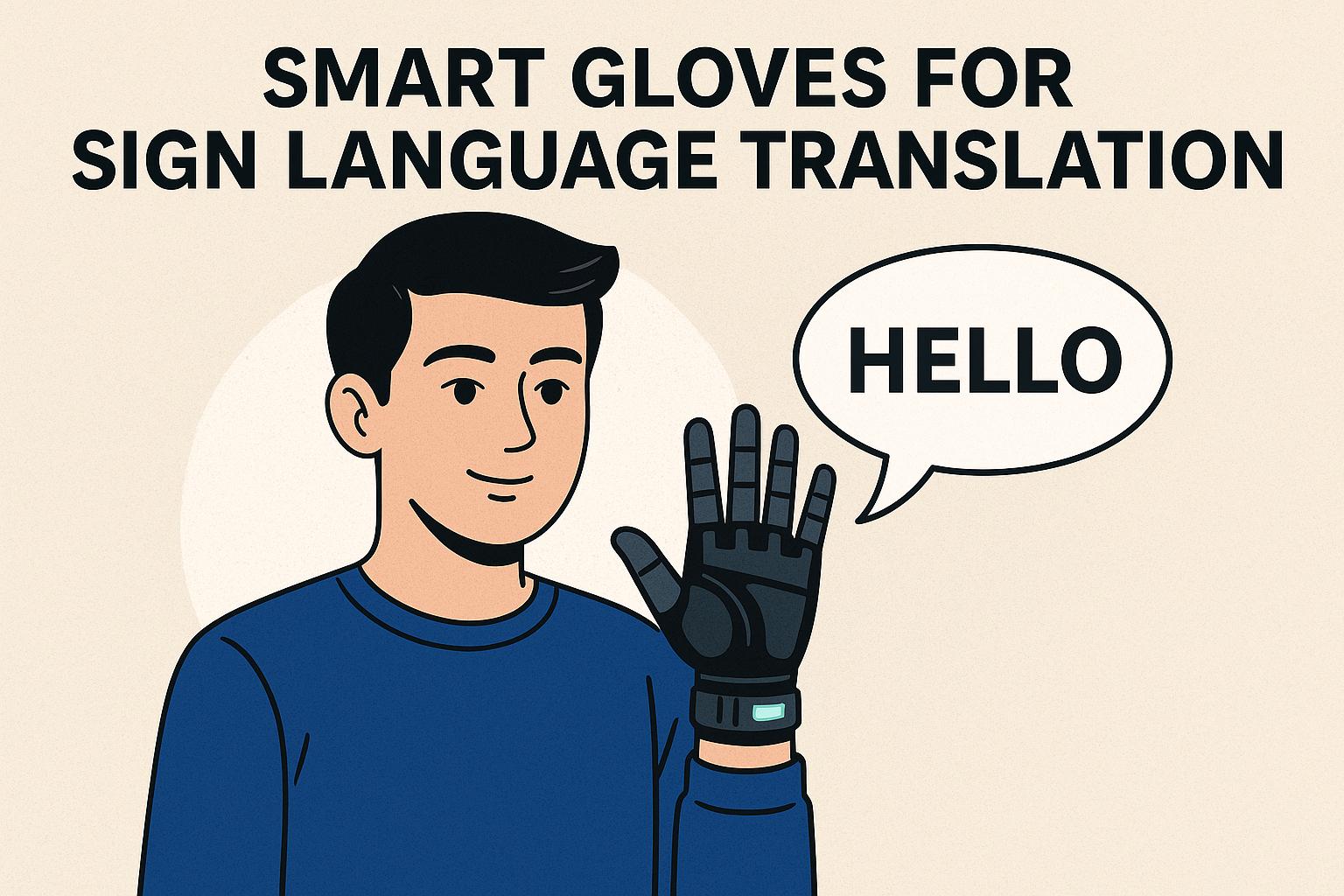
Introduction to Smart Gloves for Sign Language Translation
Smart gloves are innovative technological devices designed to facilitate sign language translation. These gloves are equipped with sensors and other electronic components that detect hand movements and gestures, translating them into spoken or written language. The development of smart gloves aims to bridge communication gaps between individuals who use sign language and those who do not.
How Smart Gloves Work
Smart gloves typically come with a variety of sensors placed on the fingers and palm, capable of detecting hand motions, angles, and pressures. These sensors collect data on the user’s hand movements, which are then transmitted to a connected device such as a smartphone or computer. Intelligent algorithms process this data, translating the gestures into corresponding spoken or text output. This output can be in multiple languages, according to the software capabilities and user preferences.
Components of Smart Gloves
Sensors: Typically include accelerometers, gyroscopes, and flex sensors that capture the nuances of finger and hand movements. Each sensor plays a crucial role in ensuring that the gloves accurately capture all necessary details of the sign language gestures, which are more nuanced than simple hand movements.
Microcontrollers: Act as the brain of the system, processing sensor data and converting it into a digital format. These controllers are programmed to recognize specific gestures and interpret them correctly, ensuring that the entire process runs smoothly without unnecessary delays.
Communication Modules: Wireless technologies like Bluetooth or Wi-Fi are used to transmit data from the glove to a connected device for further processing. These modules ensure seamless data transfer, allowing real-time translation without interruption, which is vital for effective communication.
Applications of Smart Gloves
Smart gloves for sign language translation serve multiple purposes. They enable real-time communication between deaf or hard-of-hearing individuals and those unfamiliar with sign language. By providing a reliable translation system, these gloves can play crucial roles in various environments such as educational settings, healthcare facilities, and workplaces, ensuring that communication barriers are reduced.
In educational settings, smart gloves can be a boon for students who use sign language as their primary mode of communication. By easily translating gestures into spoken or written language, the gloves make it easier for teachers and classmates to interact with deaf or hard-of-hearing students, promoting inclusivity and better learning environments.
In healthcare environments, quick and accurate communication is critical. Smart gloves can assist healthcare providers in communicating with patients who use sign language, thereby improving patient care and understanding. Moreover, these gloves reduce the need for interpreters, which can be logistically challenging to arrange at all times.
In the workplace, smart gloves enhance interactions between employees with hearing impairments and their colleagues. This fosters a more inclusive work environment, encouraging collaboration without communication gaps. Additionally, the gloves have potential applications in customer service, allowing businesses to serve sign language-using customers more effectively.
Challenges and Future Directions
Despite the promising applications, smart gloves for sign language translation face several challenges. Accuracy and Real-Time Translation: Ensuring that the system accurately captures and translates sign language into spoken or text form without significant delays remains a technical challenge. Consistency in capturing subtle hand and finger movements can affect translation quality.
Language Variability: Sign languages have regional variations, requiring the gloves to be adept at understanding local gestures. Each country—and often regions within a country—can have unique sign language dialects. Therefore, smart glove technology must continuously evolve to capture and interpret these diverse gestures accurately.
User Comfort: The design should ensure that wearing the gloves is not cumbersome or uncomfortable over long periods. Glove weight, flexibility, and fit are integral considerations that can influence user compliance and satisfaction.
The future of smart gloves looks promising as researchers continue to refine the technology. Potential improvements include the integration of machine learning algorithms to enhance gesture recognition accuracy and the expansion of language databases to encompass a wider variety of sign languages. These advances aim to improve translation precision and adaptability to different users and gestures.
Moreover, the development of more lightweight and battery-efficient designs would increase user comfort and device portability. Ensuring long battery life without compromising the glove’s performance can significantly influence a user’s willingness to adopt the technology.
As researchers and developers continue to innovate, smart gloves represent a significant advance in assistive technology, poised to make substantial impacts on communication accessibility for the deaf or hard-of-hearing communities. Their contribution to breaking down communication barriers cannot be overstated, as they open avenues for richer and more meaningful interactions.
In conclusion, smart gloves for sign language translation hold great promise and potential. As the technology evolves, individuals who rely on sign language can expect greater ease and efficiency in everyday communication. This, in turn, fosters an inclusive society where communication impairments are less of a barrier, aligning well with global efforts towards inclusivity and equality.
For those interested in exploring more about current developments and innovations in this field, more information can be accessed through various research journals and tech forums, where ongoing studies and user feedback further shape the direction and capabilities of smart glove technology.