Introduction
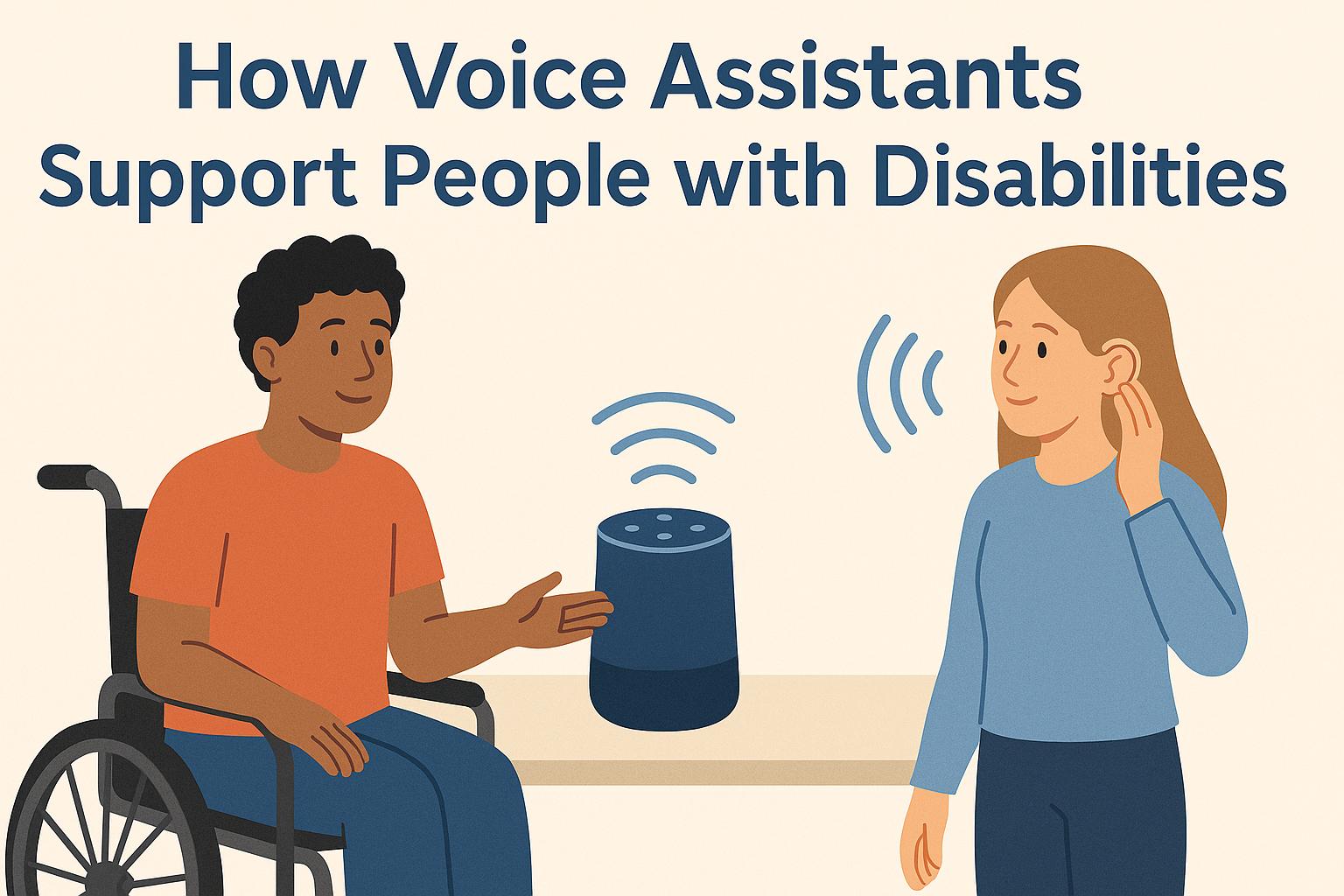
In recent years, voice assistants have emerged as powerful tools that significantly aid individuals with disabilities. These technologies leverage artificial intelligence to perform various tasks, making daily activities more accessible and manageable for those who may face physical, visual, or cognitive challenges. Voice assistants can be embedded in devices such as smartphones, speakers, and home automation systems, providing widespread utility and support.
Enhancing Accessibility for the Visually Impaired
For people with visual impairments, voice assistants have become indispensable. They can read text messages, emails, and notifications aloud, allowing users to stay connected without needing visual input. In addition, voice commands can be used to navigate the internet, access information, and control devices without relying on sight. Many modern devices come equipped with screen readers and voice assistants designed to enhance accessibility features, such as Apple’s Siri, Google’s Assistant, and Amazon’s Alexa.
This integration of technology has truly revolutionized the experience for visually impaired individuals. By providing audio feedback, a voice assistant can effectively act as the eyes for users, making day-to-day interactions with digital content more seamless. Online shopping, for instance, becomes more accessible as voice assistants can list product details or even conduct transactions via vocal instructions. Similarly, users can obtain real-time updates about news, weather, or public transportation schedules, empowering them with information without visual strain.
Beyond immediate interactions, voice assistants support deeper integration by offering hands-free navigation assistance, allowing users to move freely in unfamiliar environments with aid from GPS capabilities. This functionality aids in enhancing autonomy and safety for many visually impaired individuals and impacts their overall quality of life.
Supporting Individuals with Physical Disabilities
Individuals with physical disabilities, particularly those affecting mobility or dexterity, can greatly benefit from the use of voice assistants. These tools allow users to control home appliances, adjust thermostats, or turn on lights with simple voice commands, reducing the necessity for physical interaction with various devices. For those who cannot easily use standard input methods, such as keyboards or touch screens, voice assistants offer an alternative means of engaging with technology.
This smart home integration is not only about convenience; it represents a fundamental shift towards enabling independence. By lowering reliance on manual controls, voice assistants reduce cognitive and physical strain. Such features enhance living conditions, ensuring comfort and safety at home, a critical aspect for many with physical constraints.
Facilitating Communication for the Speech-Impaired
While voice assistants are generally designed to interpret spoken language, they also support communication for individuals with speech impairments. Various applications enable users to input text that can be read aloud by the assistant, acting as a bridge in conversations. By converting typed input into speech, these tools offer a valuable communication method, enhancing interaction and connectivity.
Technologies continue to evolve, becoming more intuitive and adaptable, thus accommodating varying speech abilities. For instance, some applications are capable of recognizing and learning user-specific speech patterns, enhancing the accuracy and reducing frustration over miscommunication. The customization of this technology opens up social avenues, allowing users to participate in conversations they might otherwise struggle to partake in, thereby fostering inclusion and social interaction.
Beneficial Cognitive Support
For individuals with cognitive disabilities, keeping track of day-to-day tasks and organizing schedules can be challenging. Voice assistants can set reminders, alert users to appointments, and provide answers to frequent questions, offering structured support in daily life. By programming routines or checklists via voice commands, users can maintain greater independence and reduce the cognitive load associated with managing various tasks.
This assistance goes beyond alerts and reminders. Voice assistants can also serve as an aid in managing financial transactions, understanding directions, and even enhancing focus on specific tasks. By integrating these functions, users can enjoy a higher degree of self-management and efficacy in navigating everyday responsibilities.
Simplifying Education and Skill Development
Voice assistants also play a role in educational support for individuals with disabilities. They can help with spelling, calculations, language translations, and access to educational content through simple voice commands. Such features help students with various disabilities engage with learning materials and acquire new skills without facing technological barriers.
In academic settings, voice assistants can facilitate learning by providing immediate help with homework or research. They can support project-based learning by offering relevant data or clarifications, enhancing the educational experience. This adaptability allows them to cater to personalized learning pathways, fostering a more inclusive environment where all students can excel and explore their academic interests without limits imposed by disabilities.
In conclusion, the impact of voice assistants on the lives of people with disabilities is substantial and diverse. These tools not only enhance accessibility but also promote inclusivity by providing alternative means to interact with technology and the environment. As this technology continues to advance, it will undoubtedly open new possibilities and pathways for greater independence and engagement with the world around us. To explore more about how technology supports individuals with disabilities, visit reputable sources such as the Disability Scoop or the National Council on Disability.