The Intersection of Neuroscience and Technology
In recent years, the field of brain-computer interfaces (BCIs) has made remarkable strides, offering new avenues for communication, especially for individuals with severe physical disabilities. These advancements demonstrate a significant blending of neuroscience, engineering, and computer science to create systems that allow direct communication between the brain and external devices. Current advancements in BCIs not only highlight the blending of various scientific disciplines but also the potential transformative impact on individuals’ lives.
Understanding Brain-Computer Interfaces
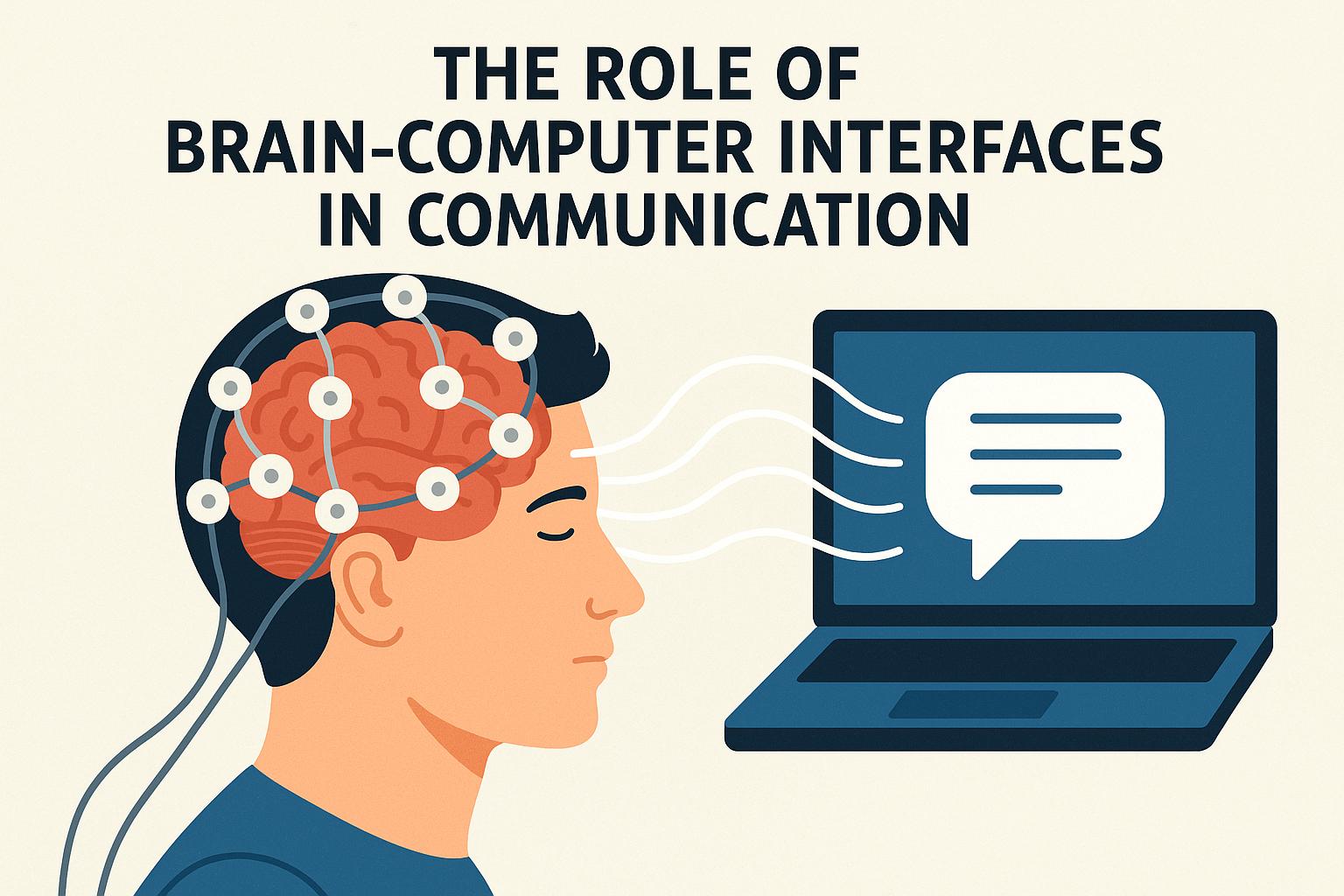
Brain-computer interfaces are systems that translate neural activity into commands that can control external devices, allowing individuals to interact with technology in new ways. BCIs work by detecting brain signals, interpreting these signals, and translating them into actionable outputs. The signals are typically acquired using electrodes, which can be non-invasive (such as electroencephalography or EEG) or invasive (requiring implants). This ability to convert the cognitive intentions of individuals into digital or mechanical outputs offers transformative possibilities in numerous fields including medicine, ergonomics, and even entertainment.
The fundamental processes involved in BCIs encompass several stages. Initially, brain signals are detected, which is quickly followed by a phase of interpretation, during which the signal is parsed to understand the user’s intent. Finally, this intent is translated into a command that external equipment can act upon. Advances in signal acquisition techniques and algorithmic interpretations have greatly contributed to the enhanced accuracy and efficiency of BCIs.
Applications in Communication
One of the most promising applications of BCIs is in communication, particularly for individuals with conditions like amyotrophic lateral sclerosis (ALS) or spinal cord injuries, who may lose their ability to speak or move. BCIs can enable these individuals to communicate by translating their thoughts into text or speech.
An example involves systems that allow users to spell out words by focusing their attention on specific letters on a screen. The BCI detects the user’s intent through brain signals and converts it into text, providing a means for communication. For individuals with progressive or degenerative conditions, the ability to maintain communication through such systems can be life-changing. Recent developments have also made it possible to directly synthesize speech from neural signals, offering real-time communication possibilities.
This application reveals a significant aspect of BCIs: their ability to bridge gaps between human intention and mechanical execution. They act as a tool for empowerment by expanding communicative capabilities beyond typical physiological restrictions. Increasing levels of sophistication in how these systems interpret neural signals mean more seamless user experiences and more potent communication tools.
Recent Technological Developments
Recent advances in artificial intelligence (AI) and machine learning have greatly enhanced the capabilities of BCIs. These technologies improve signal processing and interpretation, allowing for more accurate and faster communication interfaces. By utilizing sophisticated algorithms, researchers have made significant progress in decoding more complex neural patterns, which can lead to more intuitive and seamless communication experiences.
Machine learning has played a critical role in refining the performance of BCIs. By training models on vast datasets of neural activity, researchers are developing systems that better understand the nuances of individual brain signals. This encompasses aspects ranging from the differentiation of thoughts processes to predicting intended actions with increasing precision, thus paving the way for more user-friendly BCIs.
Additionally, as AI technology itself advances, its applications to BCIs create further improvements. It stands as an excellent example of cross-disciplinary synergy, where advances in one field can lead to breakthroughs in another, ultimately enhancing the end-user experience.
Ethical and Technical Considerations
As with any emerging technology, BCIs present both opportunities and challenges. Ethically, issues of privacy and consent are paramount when dealing with neural data. There is a need for stringent regulations to ensure that the sensitive nature of brain data is protected, and that individuals’ rights are upheld.
From a technical standpoint, achieving scalability and reliability in BCIs remains a challenge. While significant progress has been made, the technology still requires further refinement to be practical for widespread use. Continuous research and development are essential to overcome these barriers.
Security is another vital consideration as transmission of neural data can present vulnerabilities. Protecting such sensitive data from misuse or breaches becomes central, especially as BCIs become more common and integrated into daily life. Research efforts must continually evolve to ensure robust defense mechanisms against potential cyber threats.
In addition to privacy concerns, there are implications around accessibility and equal opportunity. Ensuring that the technology is accessible to all, not just those with greater resources or a higher socioeconomic status, is crucial for the ethical deployment of BCIs. Institutions, stakeholders, and policymakers must consider these aspects to ensure ubiquitous availability of this innovative technology.
For more in-depth information on BCIs and their applications in communication, you can explore resources provided by institutions specializing in neuroscience and technology, such as The National Institute of Neurological Disorders and Stroke.
In conclusion, brain-computer interfaces represent a transformative approach to communication, particularly for those with severe physical impairments. As technology advances, BCIs hold the promise of not only enhancing communication but also improving overall quality of life for many individuals. The intersection of neuroscience and technology continues to propel us toward a future where our brains themselves could seamlessly interact with the world around us, constantly redefining what it means to communicate and connect as humans. Through continuous research, development, and ethical deliberation, the potential of BCIs will likely unfold further to benefit diverse aspects of human life.